


News

2026.05.18
From Reactive Monitoring to Proactive Warning: Building the Next Generation of Smart Industrial Safety Management
With the rapid development of smart manufacturing, smart construction sites, and Industry 4.0, corporate requirements for occupational safety have gradually evolved from traditional manual inspections to real-time, data-driven, and automated management.
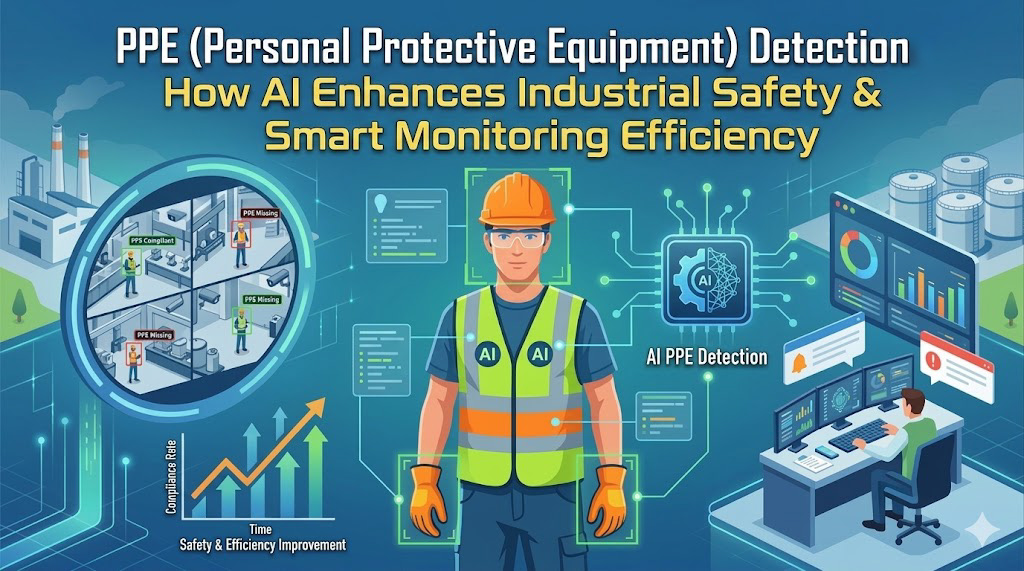
AI Personal Protective Equipment (PPE) Detection combines computer vision, deep learning, and Edge AI computing technologies to identify in real time whether personnel on-site are correctly wearing gear such as safety helmets, reflective vests, and protective gloves. By issuing proactive alerts the moment a violation occurs, the system significantly improves safety management efficiency, lowers accident risks, and helps enterprises establish a higher standard for a safe working environment.
This article provides a comprehensive analysis of the technical principles, application scenarios, deployment benefits, and future trends of PPE detection in smart industrial safety.
01 | What is Personal Protective Equipment (PPE) Detection?
Personal Protective Equipment (PPE) detection is a smart monitoring technology based on AI image recognition. By analyzing surveillance feeds in real time, it automatically determines whether on-site workers are properly wearing the required safety gear. Identifiable PPE types include:
-
Helmets / Hard Hats
-
Safety Vests / High-Visibility Vests
-
Protective Gloves
-
Safety Goggles / Eye Protection
-
Protective Masks
-
Safety Shoes / Steel-Toe Boots
When the system detects missing or improper gear, it can instantly trigger alarms, push notifications, or even integrate with access control, public address systems, or on-site warning devices—successfully upgrading industrial safety from "post-incident review" to "real-time prevention."
02 | How PPE Detection Works
PPE detection typically consists of the following three core technologies:
-
Computer Vision
Using image analysis, the system instantly extracts human silhouettes, posture information, and equipment positions from camera feeds to build scene awareness.
-
Deep Learning
By training models on massive amounts of annotated data, the AI can reliably recognize PPE gear under various angles, lighting conditions, and environments.
-
Object Detection
Utilizing common models like YOLO and SSD, the system enables real-time detection of people, safety helmets, reflective vests, and other protective equipment.
03 | Core Values of PPE Detection
Implementing AI PPE detection does more than just enhance monitoring capabilities; it establishes a comprehensive smart safety ecosystem for enterprises.
-
Real-Time Safety Alerts: Triggers instant alarms upon detecting unmapped PPE, significantly reducing the probability of accidents.
-
Reduced Manual Inspection Costs: Traditional safety relies on physical patrols; AI provides 24/7 automated monitoring, saving substantial manpower.
-
Enhanced Regulatory Compliance: Helps enterprises meet occupational health and safety regulatory requirements, reducing compliance risks.
-
Data-Driven Management Mechanism: Enables companies to optimize safety strategies by logging crucial metrics:
-
Frequency of violation events
-
Distribution of high-risk zones
-
Time-based hotspot analysis
-
Records of employee safety behavior
-
04 | Main Application Scenarios of PPE Detection
-
Construction Sites: Instantly verifies if workers are wearing hard hats and high-visibility vests, mitigating risks associated with high-altitude operations and construction accidents.
-
Factories and Manufacturing: Automatically monitors PPE compliance in high-risk production lines and machinery zones to elevate operational safety.
-
Warehouses and Logistics Centers: Monitors PPE usage in dynamic environments where forklifts and pedestrians coexist, reducing material handling accidents.
-
Energy and Chemical Industries: Strictly monitors protective gear compliance in inherently hazardous environments.
-
Public Works and Transportation Engineering: Applicable to scenarios such as road construction and rapid transit maintenance.
05 | PPE Detection vs. Manual Inspection
| Metric | Traditional Manual Inspection | AI PPE Detection |
| Real-Time Responsiveness | Low | High (Instant Alerting) |
| Labor Cost | High | Low |
| Accuracy | Prone to human error/fatigue | Stable and consistent |
| Monitoring Coverage | Limited | Multi-point coverage |
| Data Analysis | Virtually none | Complete data logging |
06 | Why PPE Detection is Moving Towards Edge AI
As the demand for real-time responsiveness on-site increases, PPE detection is rapidly shifting from cloud architecture to Edge AI computing. The core advantages of Edge AI include:
-
Ultra-low latency (millisecond-level response)
-
Reduced network bandwidth requirements
-
Enhanced data privacy and security
-
Continuous operation even when offline
07 | Key Evaluation Criteria for Enterprises Implementing PPE Detection
When planning an AI PPE system, enterprises are recommended to prioritize evaluating the following capabilities:
-
Does it support a real-time alerting mechanism?
-
Can the PPE types be customized?
-
Does it support Edge AI deployment?
-
Can it integrate with existing CCTV or VMS (Video Management Systems)?
-
Does it feature data analytics and reporting functionality?
From Reactive Monitoring to Proactive Warning: Building the Next Generation of Smart Industrial Safety Management
With the rapid development of smart manufacturing, smart construction sites, and Industry 4.0, corporate requirements for occupational safety have gradually evolved from traditional manual inspections to real-time, data-driven, and automated management.
AI Personal Protective Equipment (PPE) Detection combines computer vision, deep learning, and Edge AI computing technologies to identify in real time whether personnel on-site are correctly wearing gear such as safety helmets, reflective vests, and protective gloves. By issuing proactive alerts the moment a violation occurs, the system significantly improves safety management efficiency, lowers accident risks, and helps enterprises establish a higher standard for a safe working environment.
This article provides a comprehensive analysis of the technical principles, application scenarios, deployment benefits, and future trends of PPE detection in smart industrial safety.
01 | What is Personal Protective Equipment (PPE) Detection?
Personal Protective Equipment (PPE) detection is a smart monitoring technology based on AI image recognition. By analyzing surveillance feeds in real time, it automatically determines whether on-site workers are properly wearing the required safety gear. Identifiable PPE types include:
-
Helmets / Hard Hats
-
Safety Vests / High-Visibility Vests
-
Protective Gloves
-
Safety Goggles / Eye Protection
-
Protective Masks
-
Safety Shoes / Steel-Toe Boots
When the system detects missing or improper gear, it can instantly trigger alarms, push notifications, or even integrate with access control, public address systems, or on-site warning devices—successfully upgrading industrial safety from "post-incident review" to "real-time prevention."
02 | How PPE Detection Works
PPE detection typically consists of the following three core technologies:
-
Computer Vision
Using image analysis, the system instantly extracts human silhouettes, posture information, and equipment positions from camera feeds to build scene awareness.
-
Deep Learning
By training models on massive amounts of annotated data, the AI can reliably recognize PPE gear under various angles, lighting conditions, and environments.
-
Object Detection
Utilizing common models like YOLO and SSD, the system enables real-time detection of people, safety helmets, reflective vests, and other protective equipment.
03 | Core Values of PPE Detection
Implementing AI PPE detection does more than just enhance monitoring capabilities; it establishes a comprehensive smart safety ecosystem for enterprises.
-
Real-Time Safety Alerts: Triggers instant alarms upon detecting unmapped PPE, significantly reducing the probability of accidents.
-
Reduced Manual Inspection Costs: Traditional safety relies on physical patrols; AI provides 24/7 automated monitoring, saving substantial manpower.
-
Enhanced Regulatory Compliance: Helps enterprises meet occupational health and safety regulatory requirements, reducing compliance risks.
-
Data-Driven Management Mechanism: Enables companies to optimize safety strategies by logging crucial metrics:
-
Frequency of violation events
-
Distribution of high-risk zones
-
Time-based hotspot analysis
-
Records of employee safety behavior
-
04 | Main Application Scenarios of PPE Detection
-
Construction Sites: Instantly verifies if workers are wearing hard hats and high-visibility vests, mitigating risks associated with high-altitude operations and construction accidents.
-
Factories and Manufacturing: Automatically monitors PPE compliance in high-risk production lines and machinery zones to elevate operational safety.
-
Warehouses and Logistics Centers: Monitors PPE usage in dynamic environments where forklifts and pedestrians coexist, reducing material handling accidents.
-
Energy and Chemical Industries: Strictly monitors protective gear compliance in inherently hazardous environments.
-
Public Works and Transportation Engineering: Applicable to scenarios such as road construction and rapid transit maintenance.
05 | PPE Detection vs. Manual Inspection
| Metric | Traditional Manual Inspection | AI PPE Detection |
| Real-Time Responsiveness | Low | High (Instant Alerting) |
| Labor Cost | High | Low |
| Accuracy | Prone to human error/fatigue | Stable and consistent |
| Monitoring Coverage | Limited | Multi-point coverage |
| Data Analysis | Virtually none | Complete data logging |
06 | Why PPE Detection is Moving Towards Edge AI
As the demand for real-time responsiveness on-site increases, PPE detection is rapidly shifting from cloud architecture to Edge AI computing. The core advantages of Edge AI include:
-
Ultra-low latency (millisecond-level response)
-
Reduced network bandwidth requirements
-
Enhanced data privacy and security
-
Continuous operation even when offline
07 | Key Evaluation Criteria for Enterprises Implementing PPE Detection
When planning an AI PPE system, enterprises are recommended to prioritize evaluating the following capabilities:
-
Does it support a real-time alerting mechanism?
-
Can the PPE types be customized?
-
Does it support Edge AI deployment?
-
Can it integrate with existing CCTV or VMS (Video Management Systems)?
-
Does it feature data analytics and reporting functionality?