


News

2026.03.01
When choosing a security camera, most people focus on resolution, focal length, or field of view (FOV). However, lens distortion is another critical factor that can impact the quality of surveillance footage. Lens distortion refers to the geometric deformation in an image caused by the optical design of the lens, where straight lines in reality appear curved or compressed in the video. This phenomenon is especially common in wide-angle security cameras. Excessive distortion can affect image proportions and reduce the accuracy of surveillance interpretation.
Common types of lens distortion in security cameras:
Pincushion Distortion
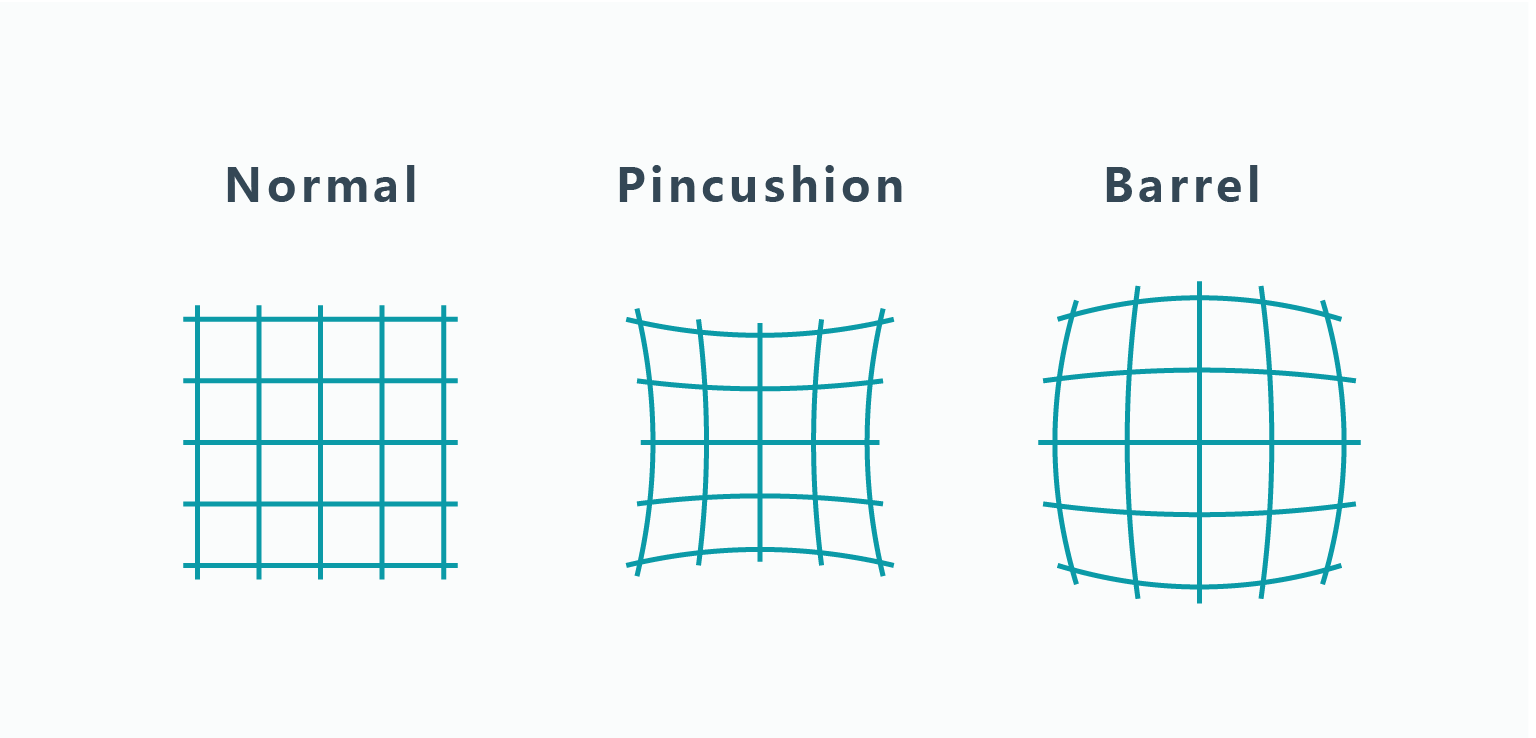
Pincushion distortion is the opposite of barrel distortion. The image appears to contract toward the center, with edge lines bending inward, as if pulled toward the middle. This distortion is typically seen in telephoto or long-focus lenses.
Barrel Distortion
Barrel distortion causes the center of the image to bulge outward, while straight lines at the edges bend outward, creating a barrel-like effect. This type of distortion often occurs in wide-angle lenses, such as those used in indoor spaces, shopping malls, or public areas.
Why lens distortion matters in surveillance systems
In real-world surveillance applications, lens distortion affects not only the appearance of the footage but also the accuracy of monitoring. For example, in parking lots, entrances, hallways, or building perimeters, noticeable distortion at the edges can make it difficult to judge distances, proportions, and actual coverage areas. For environments that require precise monitoring—such as corporate offices, commercial spaces, or smart buildings—excessive lens distortion can lead to misinterpretation of the footage. Therefore, low-distortion lenses are often prioritized when designing a surveillance system.
The importance of low-distortion lenses
To improve the accuracy of surveillance footage, many professional security cameras feature low-distortion lens designs, keeping distortion levels below a certain threshold—often under 10%. Low-distortion lenses produce more natural lines and proportions that closely reflect the actual scene, enhancing the precision of surveillance interpretation.
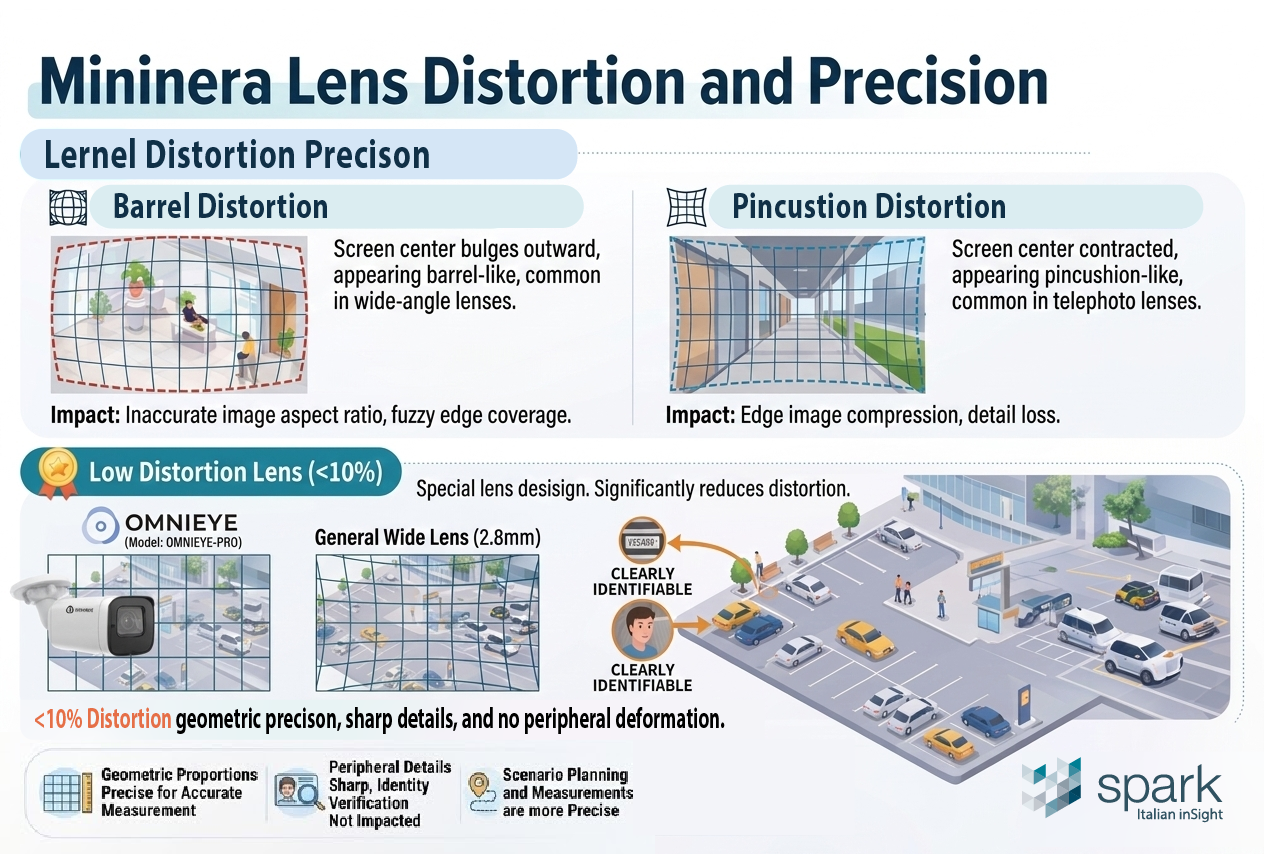
To address this, the Omnieye Lite fixed-lens series uses lenses with less than 10% distortion, effectively reducing image deformation. This ensures more natural footage and more accurate surveillance interpretation. In environments such as corporate offices, commercial spaces, or smart buildings, low-distortion lenses provide stable and reliable video data, allowing security systems to deliver higher value in safety management, site monitoring, and risk assessment.
Contact us to learn more about our surveillance solutions and products.
When choosing a security camera, most people focus on resolution, focal length, or field of view (FOV).However, lens distortion is another critical factor that can impact the quality of surveillance footage. Lens distortion refers to the geometric deformation in an image caused by the optical design of the lens, where straight lines in reality appear curved or compressed in the video. This phenomenon is especially common in wide-angle security cameras. Excessive distortion can affect image proportions and reduce the accuracy of surveillance interpretation.
Common types of lens distortion in security cameras:
Pincushion Distortion
Pincushion distortion is the opposite of barrel distortion. The image appears to contract toward the center, with edge lines bending inward, as if pulled toward the middle. This distortion is typically seen in telephoto or long-focus lenses.
Barrel Distortion
Barrel distortion causes the center of the image to bulge outward, while straight lines at the edges bend outward, creating a barrel-like effect. This type of distortion often occurs in wide-angle lenses, such as those used in indoor spaces, shopping malls, or public areas.
Why lens distortion matters in surveillance systems
In real-world surveillance applications, lens distortion affects not only the appearance of the footage but also the accuracy of monitoring. For example, in parking lots, entrances, hallways, or building perimeters, noticeable distortion at the edges can make it difficult to judge distances, proportions, and actual coverage areas. For environments that require precise monitoring—such as corporate offices, commercial spaces, or smart buildings—excessive lens distortion can lead to misinterpretation of the footage. Therefore, low-distortion lenses are often prioritized when designing a surveillance system.
The importance of low-distortion lenses
To improve the accuracy of surveillance footage, many professional security cameras feature low-distortion lens designs, keeping distortion levels below a certain threshold—often under 10%. Low-distortion lenses produce more natural lines and proportions that closely reflect the actual scene, enhancing the precision of surveillance interpretation.
To address this, the Omnieye Lite fixed-lens series uses lenses with less than 10% distortion, effectively reducing image deformation. This ensures more natural footage and more accurate surveillance interpretation. In environments such as corporate offices, commercial spaces, or smart buildings, low-distortion lenses provide stable and reliable video data, allowing security systems to deliver higher value in safety management, site monitoring, and risk assessment.
Contact us to learn more about our surveillance solutions and products.